
Why proofing beats poison: the humane approach to rodent control
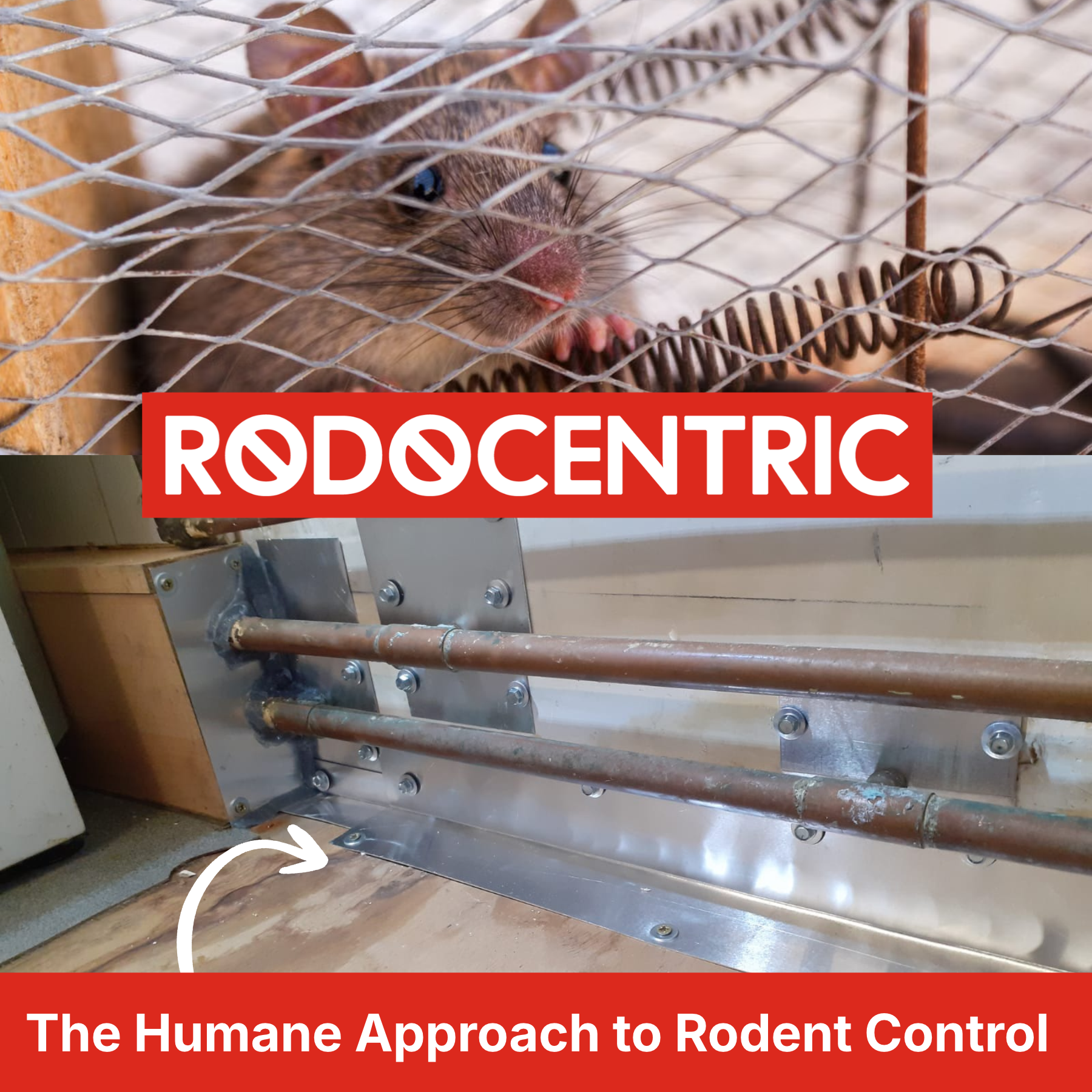
If you've found droppings in the kitchen cupboard or heard scratching behind the skirting at night, you probably want one thing: for the rodents to be gone, and to stay gone. The usual reaction is to put down poison or set a few traps. That may deal with what's already inside, but it doesn't tackle the reason they got in.
Humane rodent control prevents the problem before it starts. Instead of waiting for mice or rats to turn up, proofing finds the gaps they could use to get in and seals them for good. It's safer for children and pets, kinder to the animals, and more likely to give you lasting peace of mind.
Here's why proofing beats poison, and what it actually involves.
How poison and traps actually work (and where they fall short)
Most rodent control starts with poison, traps or a mix of both. Poison baits (rodenticides) are laid where mice or rats are active, and the animals eat them over a few days. Traps catch them one at a time. Both can reduce the numbers already in your home, but neither stops new ones getting in.
And they aren't always as reliable as people expect. Rats are naturally wary of anything new in their environment and often avoid traps and bait for a while before going near them. Many rat populations in southern England have also built up resistance to common poisons, so some treatments simply don't work.
In short, poison and traps don't guarantee long-lasting results. And because the way in is left open, numbers can quickly recover.
Rodents come in waves: why the problem keeps coming back
One of the most frustrating things about a rodent problem is that it often seems to go away, then comes straight back. There's a simple reason for that: scent trails.
Mice and rats rarely turn up alone. They tend to arrive in waves, and as they move through your home they leave scent trails behind. These trails act like signposts, telling other rodents that there's warmth, shelter and food to be found and showing them exactly how to get in.
So even though poison or traps may have handled one group, the trail is still there. The next wave follows the same route, through the same gap behind the kitchen units or around the same pipe, and the cycle starts again. That's why so many homeowners find themselves booking several treatments, often around the same time each year.
Dealing with the rodents that are already inside only solves half the problem. The other half is the way in. Proofing deals with that second half. Once every gap is sealed, it doesn't matter how strong the scent trail is, because there's nowhere left for the next wave to get in.
What rodent proofing involves
Rodent proofing is simple in principle: find every way in, and seal it for good. However, doing it properly takes a bit more care.
With Rodocentric, the process begins with an assessment. Your property will be given a thorough inspection, picking up every weak spot and sign of rodent activity, from gaps around pipes to damaged brickwork. Then you'll get a detailed proofing report, so you know exactly what work is needed and why.
Then comes the exposure work. Most rodent problems start in the kitchen, where pipes and service openings run behind units and appliances. Reaching those gaps often means removing kitchen units, baths or appliances, all of which is most often handled by Rodocentric, so you're not left coordinating multiple contractors unless it is more cost-effective to do so.
After that comes sealing. Gaps are closed with professional-grade materials chosen to last: metal plates on junctions, pipes and service openings, anti-gnaw fabric, specialist sealants and stainless steel mesh. In living areas, plates can be fitted behind skirting boards, out of sight. Unlike expanding foam, which rodents are able to chew through, these materials are made to hold.
Finally, you'll receive advice for the future. Rodocentric will leave you with practical guidance on keeping your home protected and reducing the risk of anything getting back in.
The result is a home that's sealed off from the cavities rodents were using, with nothing left to draw them back. Find out more about Rodocentric's rodent proofing services.
Safer for children, pets and wildlife
Poison is designed to kill, and it doesn't always stop at rodents. The Health and Safety Executive warns that because of how rodenticides are used, and how they look and smell, children, pets and other animals are more likely to be harmed by them than by many other products. In a busy family home, keeping bait out of reach is easier said than done.
The risk doesn't end indoors either. A poisoned rodent could wander outside before it dies, where it may be eaten by a cat, a fox or a bird of prey. This is known as secondary poisoning, and it's one of the main reasons UK rodenticide use is so tightly controlled.
Proofing avoids all of that. There are no chemicals or bait to keep track of, and nothing to clean up afterwards. It just gives you a home that rodents can't get into.
What industry guidance recommends
Proofing first isn't just a preference. It's the approach that UK guidance points to. Rodent control in the UK is built on a principle called Integrated Pest Management. In practice, that means working through the options in order: change the environment so it's less attractive to rodents, then proof the property so they can't get in, and only then consider poison.
The British Pest Control Association is clear that rodenticide should always be a last resort, partly because of the risk to people and animals, and partly because overuse is making rodents more resistant to it.
In other words, the guidance in the UK is clear: the best long-term answer is to stop rodents getting in at all.
A permanent fix, not a recurring one
Poison and traps often create a routine: the problem comes back, you call someone to handle it again, and the cycle repeats. Proofing breaks that pattern.
Because the work seals off the routes rodents use, it's a one-time structural upgrade, not a service you have to keep paying for. Durable materials like metal plates and stainless steel mesh are made to last, so the protection stays in place long after the job is done.
For many homeowners, the biggest difference is how it feels afterwards: quieter nights with less scratching and scampering, no more threat of rodents plundering your home, and no more risky, repetitive treatments. And if you're someone who's scared of rats and mice, you'll appreciate that feeling even more.
Every Rodocentric job is also backed by a satisfaction guarantee, so you can be confident the work has been done properly. See the difference professional proofing makes.
Is proofing right for your home?
If you're dealing with mice or rats, or keep finding signs of them year after year, proofing is certainly worth considering. It deals with the cause, not just the symptoms.
That said, not every home needs extensive work. Sometimes a few well-sealed gaps are all it takes. The only way to know for sure is a proper look at your property, so you can understand what's needed and what isn't.
If you're in London, Kent or the South East and want an honest view of your options, get in touch to arrange an assessment or ask a question about how proofing works.
