
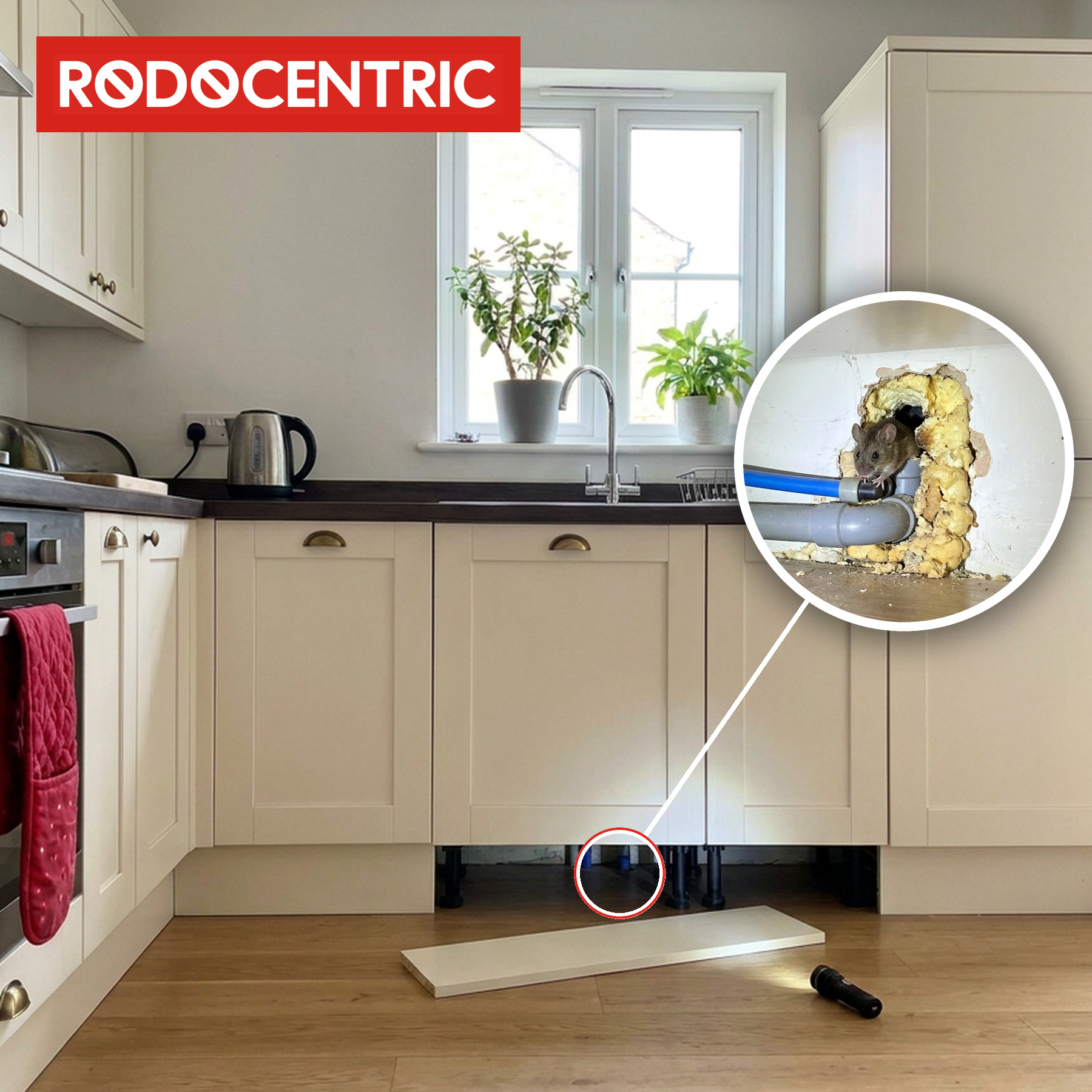
Most mouse problems get treated as a numbers game: set the traps, count the catches, call it done. Mice don’t play by those rules. They follow the scent trails left by the ones before them, and the gap they came through stays open long after the last trap is cleared.
That’s the short answer to why mice keep coming back. Trapping or poison deals with the mice already inside. It does nothing about the way in.
The good news is that the cycle can be broken, and it starts with understanding why it keeps repeating.
The cycle most homes get stuck in
It usually goes like this. Droppings appear, traps or bait go down, and within a week or two things go quiet. A month later, or the following autumn, the scratching starts again in the same cupboard.
Each round costs money and time. Worse, each return chips away at the belief that the problem can be fixed at all. Plenty of homeowners end up assuming mice are just something they have to live with. They aren’t.
Why mice keep coming back
The entry point is still open
A mouse can fit through a gap about the width of a pencil. If that gap is still there, the next mouse will find it. The Universities Federation for Animal Welfare puts it plainly in its guidance on humane rodent control: unless you remove the routes rodents use to get into a property, they will return even if the ones currently there are killed.
Scent trails lead the next ones in
Mice are territorial. The British Pest Control Association explains that they mark their area with urine and keep checking it, so the same routes get used again and again. Those marks don’t vanish when the mouse does. To a mouse outside, a well-used route is a signpost: food and shelter this way.
Poison often struggles in London
Poison is the go-to answer for many people, but in London it has a specific weakness: resistance. BPCA also points out that it is common knowledge in the pest control industry that almost all house mouse populations in London are resistant to traditional rodenticides. On top of that, mice graze on lots of small food sources rather than one, so bait often goes untouched. And whether it’s mice or rats, poison does nothing about the gap they came through.
The neighbours are close
In terraces, semis and converted flats, mice move through shared voids and wall cavities. Clearing one house doesn’t clear the street. If the route in stays open, there’s always a population close enough to find it.
The seasons bring new arrivals
Every autumn, mice that have lived outdoors all summer move indoors in search of warmth, and a route used last winter can be found again this year.
Signs the same problem is coming back
Recurring mice tend to leave a pattern. Watch for:
Activity in exactly the same spots as before, such as the same cupboard, corner or appliance.
Fresh droppings where old ones were cleaned away.
Dark, greasy smear marks building up along the same stretch of skirting.
Scratching or scurrying at the same time of year, often as the weather turns cold.
When the pattern repeats, the entry point is the common thread.
Trapping and proofing are two different jobs
Trapping and proofing aren’t rivals. They solve different problems. Trapping deals with mice already in the house. Proofing deals with the way in.
If mice are nesting indoors, they may need removing first, often by a pest control professional, and then the property can be proofed. Nesting inside is less common than people think, and mice are often not on site when proofing begins, because they come and go along their routes. That’s the humane case for putting proofing before poison: deal with the cause, not just the latest arrivals.
How to stop mice coming back
1. Find every likely entry point
A proper assessment looks at the whole property, not just the room where mice were seen. That means pipe and cable entries, gaps behind kitchen units, boiler cupboards, under-stair spaces, air bricks and door thresholds. The route mice use is often some distance from where the droppings appear.
2. Seal gaps with materials mice can’t chew
Mice will gnaw through soft fillers. Expanding foam on its own is a common DIY fix that rarely lasts. Durable proofing uses metal plates over junctions and service openings, stainless steel mesh, anti-gnaw fabric and sealants, fitted so they stay put.
3. Make the home less inviting
Proofing does the heavy lifting, but good habits help. Keep dry food and pet food in sealed containers, put bins out with lids closed and keep bird feeders well away from the house.
4. Keep an eye on the old hotspots
After proofing, check the places where activity used to show up. A clean, quiet cupboard over the following weeks is a good sign. Anything new is worth flagging straight away, so it can be looked at while it’s fresh.
What Rodocentric does differently
Rodocentric specialises in rodent proofing, not general pest control. Every job starts with an assessment visit and a report that sets out where rodents are likely getting in and what is reasonably needed to stop them, nothing more. Rodent proofing is carried out with durable materials and comes with a satisfaction guarantee, and common questions about the process are answered on the FAQ page.
Breaking the cycle
Mice coming back isn’t bad luck, and it isn’t a sign you’ve failed. It’s a sign the way in is still open. Close it properly and the cycle has nothing left to run on. Rats follow the same pattern, and the same fix applies. If you’re tired of setting the same traps every winter, book a rodent proofing assessment and find out where they’re getting in.